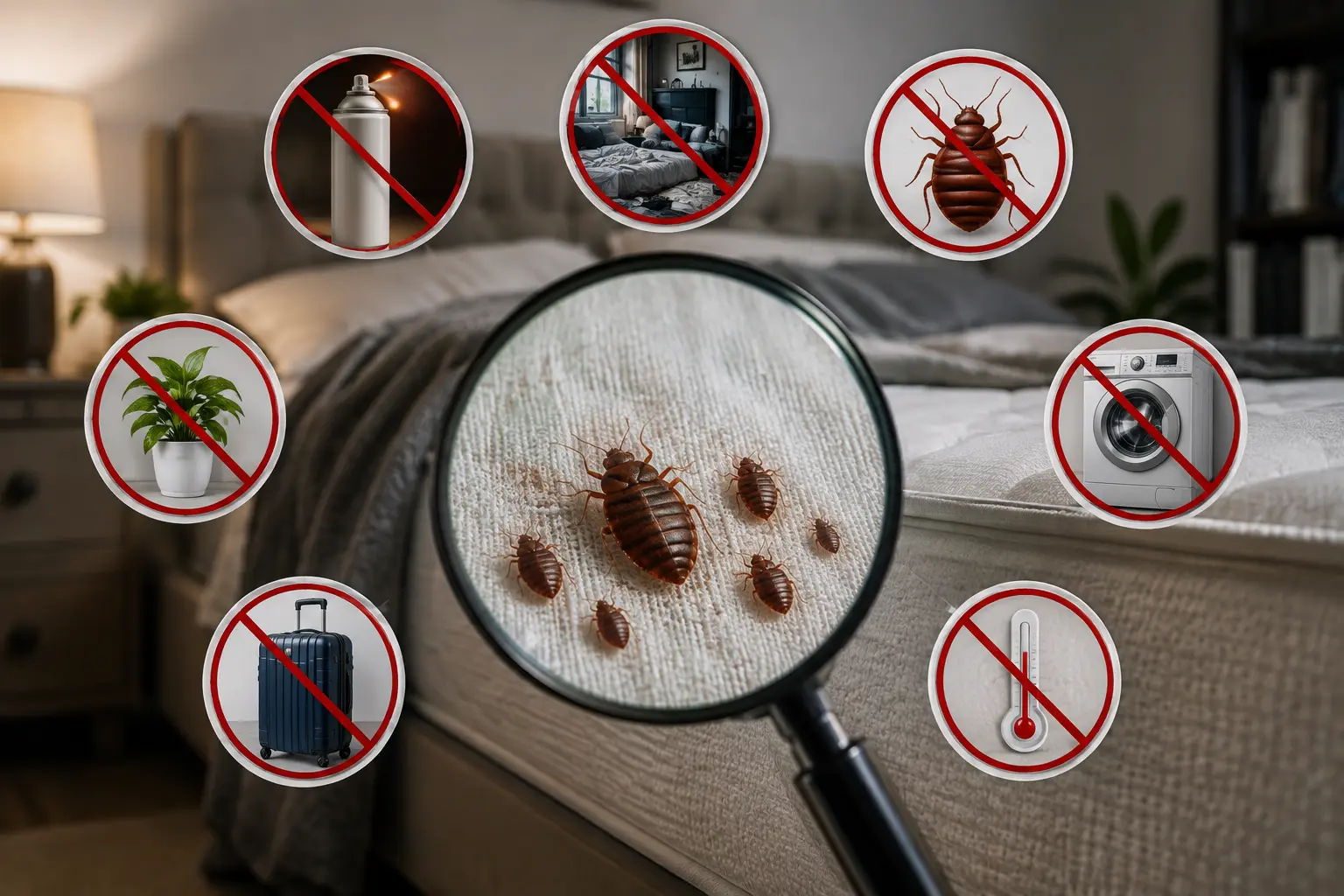
Bed bug myths spread faster than the insects themselves, and that mix of fear and bad information can make a small problem turn into a big one. If you want to protect your home, you need more than guesses and horror stories; you need clear answers about bed bug myths and what’s actually true.
This guide breaks down the most common stories people repeat about these pests and replaces them with real-world experience and science. By the end, you’ll know which "facts" to toss out, which warnings to take seriously, and how to act quickly and confidently if you ever spot signs of trouble.
People often hear dramatic stories from friends, relatives, or social media, and those stories feel believable because bed bugs already make most of us uneasy. That’s exactly how many bed bug misconceptions get started and then repeated for years.
On top of that, bed bugs are small, sneaky, and hard to catch in the act, so people fill in the gaps with guesses instead of solid bed bug facts. Fear plus guesswork is the perfect recipe for bad decisions during an infestation.
One of the most damaging pest control myths is that bed bugs only target messy or unclean homes. In reality, these insects care about blood meals and hiding spots, not how tidy your house looks.
Hotels, high-end apartments, offices, and even hospitals deal with these pests, which is why ongoing bed bug awareness is so important. Anyone who has visitors, travels, or buys secondhand furniture can bring them home by accident.
These pests are drawn to body heat, the carbon dioxide we exhale, and the chance to feed while we’re sleeping. Those are the real bed bug infestation facts that explain why they prefer beds, couches, and soft furniture where people sit or rest for long periods.
They’re hitchhikers, not explorers, which means they usually arrive on luggage, clothing, backpacks, or used mattresses and then spread from room to room. Cleaning helps you spot them sooner, but it doesn’t decide whether they show up.
Another common story is that bed bugs are too small to spot without special tools, and this false idea makes people hesitate to inspect their home. The truth about bed bugs is that adult insects are about the size and shape of an apple seed and clearly visible to the naked eye.
Freshly hatched nymphs are tiny and pale, but with a flashlight and careful inspection you can still see them along seams, cracks, and folds. That’s why slow, methodical checks around beds and sofas work better than quick, casual glances.
Start by pulling back bedding and looking closely along the mattress seams, especially near the head of the bed where you sleep. Many common bed bug mistakes happen when people only look at the top of the mattress and ignore the edges, tags, and underside.
Next, check the bed frame, baseboards near the bed, and nearby furniture joints for live insects, tiny dark spots, and shed skins. A small hand mirror and a bright phone flashlight make this kind of inspection much easier.
These insects are most active at night, but that doesn’t mean they work on a strict schedule, and they can bite during the day if they’re hungry and you’re resting. Some pest myths even claim they only live in mattresses, which ignores how flexible and resilient these insects really are.
They can hide in bed frames, nightstands, curtains, wall cracks, and even electrical outlets, which explains why quick, surface-level treatments almost never solve a serious infestation. They look for any quiet, narrow space close to where people sit or sleep regularly.
Bites often show up on exposed skin, such as arms, legs, neck, or back, and they may appear in small clusters or lines. Because many skin reactions look alike, solid bed bug education always includes checking for physical evidence in the room, not just relying on how bites appear.
If you see unexplained bites plus dark spotting on sheets, tiny blood smears, or shed skins near sleeping areas, it’s time to investigate more carefully or call a professional. Acting early gives you more control and usually lowers the cost of treatment.
Plenty of blog posts and social threads promise fast cures using essential oils, hair dryers, or store-bought foggers, but those usually spread the problem instead of solving it. Some of these pest control myths sound comforting because they seem cheap and easy compared to professional treatment.
In practice, home remedies might kill a few insects you can see but leave eggs and hidden clusters untouched, which lets the population bounce back quickly. Missing just one pocket of insects behind a wall or under a baseboard can undo weeks of effort.
Vacuuming, washing bedding in hot water, and using high-heat drying cycles are excellent support steps, because they remove live insects and eggs from fabrics. These steps tie directly into reliable bed bug prevention facts and should be part of your routine if you travel often.
However, heat and insecticide treatments planned by trained technicians are usually needed for moderate or heavy infestations. A thorough plan targets every stage of the life cycle and every potential hiding place instead of chasing only the insects you can see.
Bed bugs are patient survivors, and in cooler conditions they can go weeks or even months without a blood meal, which makes them hard to monitor. Some people stop treatment too early because they misunderstand key bed bug infestation facts and assume a quiet week means success.
Professionals look for a sustained absence of fresh bites, new droppings, or live insects over several weeks, ideally across multiple inspections. Sticky monitors and encasements on mattresses and box springs help confirm that no hidden insects are still active.
Keeping calm, informed, and methodical helps you avoid panic purchases, useless sprays, and rushed decisions. Solid bed bug awareness also helps you explain the situation to family members or landlords so everyone takes the problem seriously without blaming anyone.
Once people understand how these insects spread, they stop making assumptions about cleanliness or personal habits. That shift in mindset makes it easier to cooperate on inspections, treatment, and follow-up checks.
Good information matters most before you ever see a live insect, because prevention is cheaper and far less stressful than a full cleanup. Reliable bed bug education focuses on simple habits that lower your risk without turning every trip or visitor into a source of fear.
After traveling, inspect your luggage outdoors or in a bright entry area, and run travel clothes through a hot dryer cycle before putting them away. Taking a few minutes for these habits is far more effective than relying on random tips shared online about pest myths.
Use light-colored mattress encasements so dark spots stand out during quick visual checks. Keeping clutter away from beds and sofas gives insects fewer places to hide and helps you respond quickly to any new bed bug facts you learn from reliable sources.
Be cautious with secondhand furniture, especially mattresses, box springs, and upholstered chairs, and inspect seams and joints very closely before bringing them inside. A short, careful check is easier than trying to treat a full home once the insects have spread.
Most fear around these insects comes from stories that sound convincing but fall apart when you compare them to solid science and real-world experience. Understanding the difference between rumors and reality helps you respond faster, avoid costly mistakes, and talk confidently about bed bug myths with your family or building manager.
If you suspect a problem, don’t wait for it to "go away on its own" or rely on guesswork; reach out to a trusted local expert such as Kiran Enterprises for an inspection, clear answers, and a focused treatment plan that puts accurate information first and builds on proven bed bug facts.
Get a same-day inspection from our certified technicians.
Chat on WhatsAppOr call +91 98452 73699