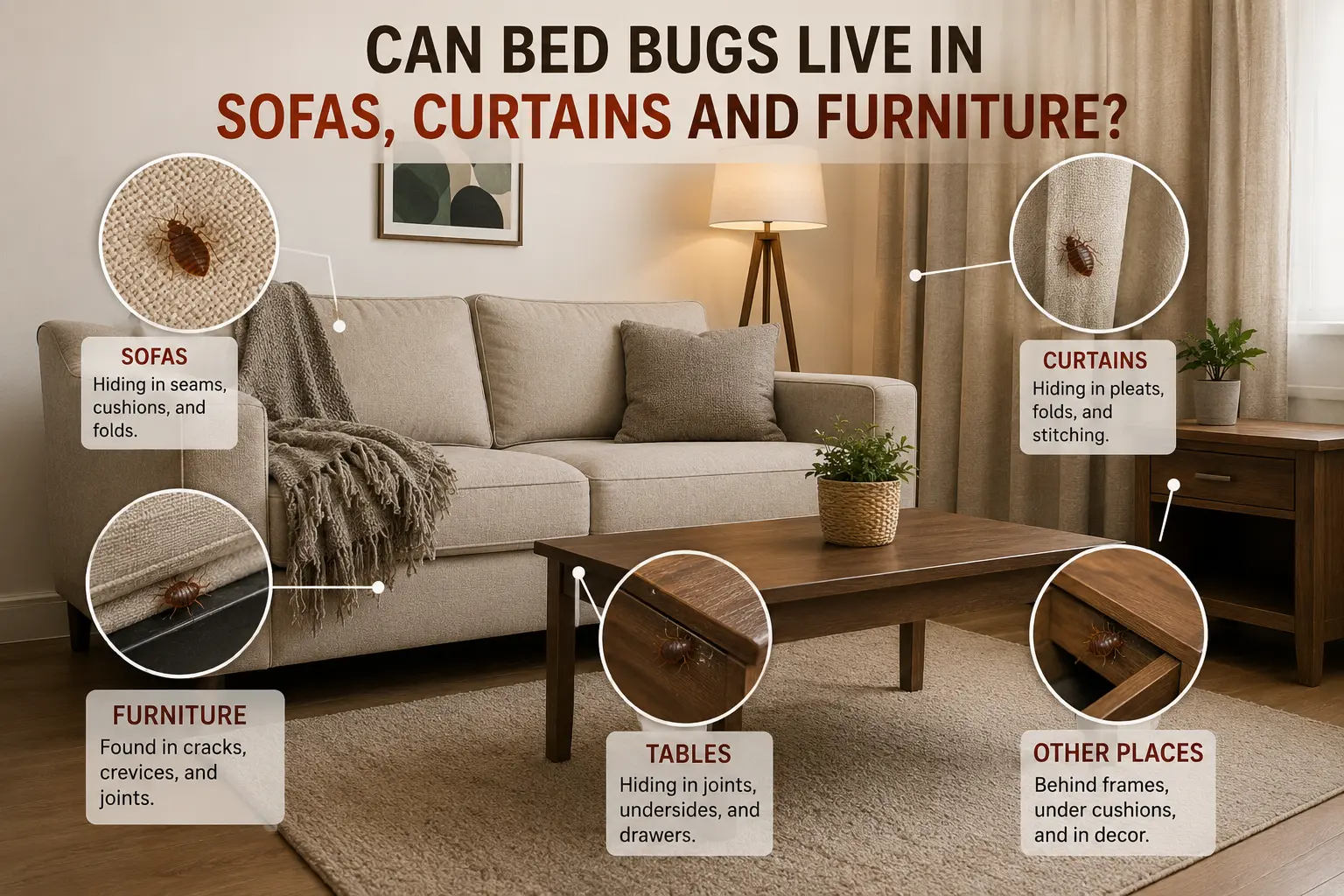
Spotting a few mysterious bites and then realizing they might be from bed bugs in furniture can turn a normal day into a stress spiral. You sit on the couch, lie on the bed, pull the curtains, and suddenly every soft surface in your home feels suspicious.
The good news is that you can absolutely get ahead of this problem if you understand how these pests behave, where they hide, and what it really takes to clear them out. This guide breaks down how bed bugs move through sofas, curtains, wooden pieces and other household items, and how to build a simple, practical plan to protect your home.
Many people are shocked to learn that bed bugs don’t just stay in mattresses. Any place that offers tight seams, gaps, and a nearby blood meal can become a home for bed bugs in furniture, and that includes pieces you use every day in your living room or bedroom.
They prefer to stay close to where you rest or sleep for long stretches. That means chairs, recliners, bedside tables and even curtain rails can all support a silent population if conditions stay warm, dark and undisturbed.
Furniture gives bed bugs shelter, stable temperatures and hundreds of tiny crevices to hide between feedings. A classic example is bed bugs in sofa cushions where the pests can slip between the fabric layers, hide around the zippers, or squeeze into the frame and only emerge at night.
These insects are flat, patient and very good at staying out of sight, which is why people often miss the early stages of a problem and only react once the bites, stains and shed skins become obvious.
Bed bugs don’t eat wood or fabric; they feed only on blood, so almost any material can support an infestation as long as it offers tight spaces. That’s why you might find bed bugs in upholstery on dining chairs or padded benches, even if those pieces are not in the bedroom.
Hard, smooth items with fewer joints tend to be less at risk, while pieces with plenty of folds, screw holes and decorative trim hold more potential hideaways around the parts you don’t usually inspect.
Once they’re introduced to a home, bed bugs spread by crawling short distances and hitchhiking on fabrics and personal items. Over time they create clusters of harborages in areas you might not think to check.
Understanding these patterns helps you search methodically instead of randomly tearing the room apart and still missing the core infestation.
People often overlook the family room even though bed bugs in couch seams, under removable covers and deep inside the frame can be just as active as any mattress infestation.
Key areas to check include under toe-kicks, along the piping, inside storage compartments, beneath dust covers, and around any metal brackets that hold the frame together.
Fabric hanging near beds or seating can easily be colonized, which is why technicians regularly find bed bugs in curtains along the pleats, at the top hook tape, and around rings or grommets.
They also crawl into the folds of blackout linings, sit behind tiebacks, and squeeze into cracks in the window frame or curtain rod brackets, using these vertical routes to move between sleeping areas.
Even pieces that look solid can harbor pests. Tiny manufacturing gaps, joints and screw holes are enough space for a cluster of insects and eggs if the item sits close to where people rest.
This is especially relevant for second-hand or inherited pieces that may have been stored for a long time without a careful inspection.
It’s very common to find bed bugs in wooden furniture such as bedside tables, headboards, dressers and even coffee tables, especially near the bedroom or living room seating.
They tend to favor recessed screw heads, unfinished undersides, decorative grooves, loose veneer edges and any crack where two panels join and are rarely moved or cleaned.
Many infestations spread through smaller items people don’t think to check, like bedside shelves, storage ottomans, and padded benches at the end of the bed.
Any home furniture pests that thrive in dark, still conditions will often share similar areas, so watching these locations closely gives you an early warning before insects multiply.
Catching bed bugs early makes treatment faster, cheaper and far less disruptive. Instead of waiting for severe bites, build a habit of checking furniture surfaces and seams any time you move or deep clean a room.
A flashlight and a simple notepad are often enough to track what you’ve checked and what still needs another look, especially in cluttered homes.
Fabric items often show the first clues. On cushions or mattress edges you might notice small dark dots from dried fecal spots, pale shed skins or tiny white eggs glued into seams where bed bug hiding spots feel protected.
People sometimes also notice rusty streaks from crushed insects, musty odors near heavily infested areas, or linear bite patterns on skin that appear overnight and then fade slowly.
Soft goods like throws, padded headboards and ottomans can all show these signs, which is why a careful bed bug inspection should always include every item you regularly lean on or sit against.
Window coverings deserve the same attention; if you suspect bed bugs in curtains, take them down, inspect the folds, and check the header, hooks and any fabric loops one by one.
On wooden frames and bed bases, look for dark spotting near joints, behind wall fixings and inside screw holes, using a credit card or similar tool to probe cracks gently.
If you suspect bed bugs in furniture that’s painted or varnished, pay attention to chipped or lifting areas where insects could slip underneath and avoid contact with cleaning tools.
Once you confirm a problem, resist the urge to throw everything away. Bed bugs in furniture can often be cleared with a structured plan using a mix of preparation, physical removal and targeted treatments.
A calm, step-by-step approach is more effective than random spraying and will also make any professional treatment faster and more reliable.
Start by reducing clutter around sofas, beds and chairs so insects have fewer secondary hideouts, then vacuum seams, folds and edges slowly using a crevice tool.
For suspected bed bugs in sofa cushions or covers, bag removable fabrics, wash them on a hot cycle if the label allows, and then dry on high heat to kill all life stages.
Vacuum slowly along every seam and fold.
Empty the vacuum into a sealed bag and discard it outdoors.
Use a hand steamer on fabrics and cracks where safe.
Install interceptor cups on bed and sofa legs to monitor movement.
Heat is one of the most reliable tools, especially for treating bed bugs in upholstery that can’t be washed, provided the fabric can safely handle higher temperatures.
Any DIY effort should be paired with careful monitoring over several weeks, because eggs hatch in cycles and new nymphs may appear even after the first round of cleaning.
If the problem covers multiple rooms, keeps returning after home treatments, or you can see insects in daytime, it’s time to consider professional furniture pest control from a licensed provider.
Technicians can integrate safe insecticides, steaming, dusts and follow-up visits, targeting each piece of furniture based on its materials and how people use it.
This is especially important if you suspect bed bugs in couch frames or recliner mechanisms where access is limited and a trained eye and specialized tools make a big difference.
Larger or long-running infestations, especially those involving bed bugs in wooden furniture that’s built-in or antique, often need several visits and a customized plan rather than a single treatment.
Once you’ve cleared an infestation, prevention becomes the priority. Simple routines cut the risk dramatically and help you catch future issues in weeks instead of months.
The goal isn’t to live in fear, but to build a stable, low-effort system for monitoring your rooms and protecting your furniture.
Be cautious with second-hand pieces: inspect used chairs, wardrobes and tables outside your home first, then treat suspicious items with heat or active monitoring before bringing them indoors.
Travel is another common route for bed bugs in furniture, so unpack luggage away from sofas and beds, wash travel clothes promptly, and keep suitcases zipped and stored off soft furnishings.
If you deal with frequent visitors, tenants or guests, create a simple checklist so every deep clean includes a quick bed bug inspection of key rooms.
Many long-term furniture infestation cases started with a single missed item from a hotel, hostel or shared transport, so a little routine goes a long way.
It’s unsettling to think about pests hiding where you relax, but with clear information and a calm process, bed bugs in furniture don’t have to take over your home or your peace of mind.
If you’re seeing suspicious bites, stains or live insects, act early: inspect your sofas, curtains, beds and nearby wooden pieces, start basic cleaning and monitoring, and then bring in a trusted local professional like Kiran Enterprises if the signs keep growing or you feel overwhelmed by the inspection work.
Get a same-day inspection from our certified technicians.
Chat on WhatsAppOr call +91 98452 73699