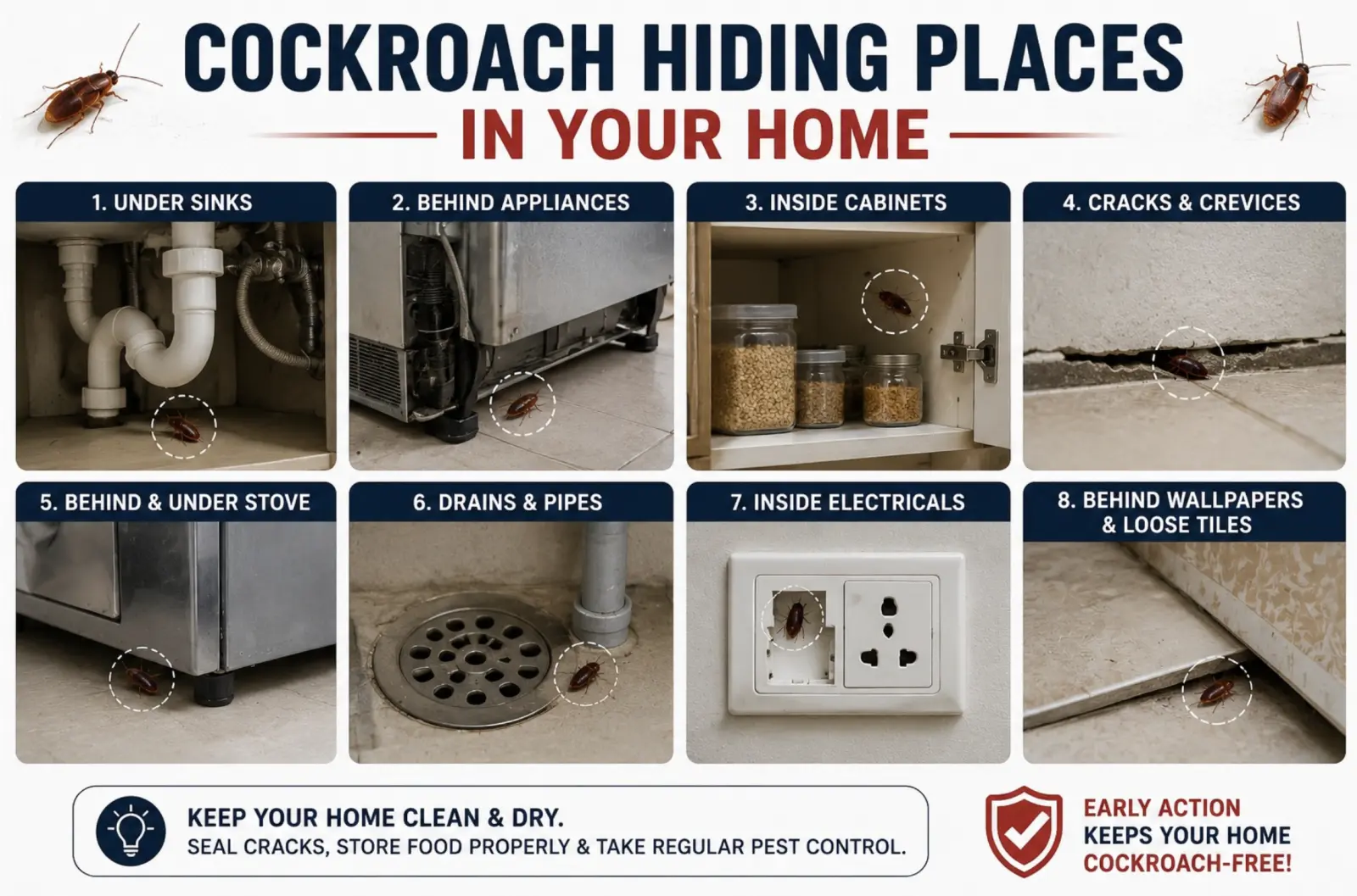
If you’re asking yourself "where do cockroaches hide?", chances are you’ve already seen one dash under a cupboard or disappear behind a pipe. In homes across Bangalore and Mysore, a single cockroach usually means many more are hiding close to food, water, and warmth.
You don’t need to tear your whole house apart to find them, but you do need to know their favourite hiding zones. Once you understand how they think, you can target the right corners, seal entry points, and decide when it’s time to call a professional.
Both cities stay warm most of the year, which is perfect for a cockroach infestation to build quietly in the background. Humidity, older buildings, common walls, and regular water leaks give roaches everything they need without travelling far.
Most apartments and independent houses share plumbing lines and shafts, so roaches move easily between kitchens and bathrooms. If your neighbour has heavy activity, you’re at higher risk even if you keep your home clean.
Kitchens are the number-one cockroach hiding places because they combine food spills, moisture, and dark gaps. Start here if you see droppings, egg cases, or that musky roach smell.
Work methodically from top to bottom with a torch and a flat tool to tap and shift items. The idea is to disturb them, see where they run, and then treat those locations properly instead of spraying everywhere.
The wooden area below the sink often stays damp due to minor leaks, making it prime real estate for kitchen cockroaches. They squeeze into gaps around pipes, hide behind cleaning bottles, and rest under shelf liners.
Clear everything out once a week, check the back corners, and run your hand along the edges to feel for droppings that look like black pepper.
Warm motors and undisturbed gaps are ideal for a growing cockroach infestation. Food crumbs slip under the fridge, and sticky spills under the microwave can feed roaches for days.
Pull appliances forward at least once a month, vacuum the floor and wall edges, and inspect the cable entry points where they may be sheltering.
Dark cupboards, especially corner units, are common cockroach nests in busy family kitchens. They prefer shelves with packaged foods, plastic bags, and old newspapers pressed to the back.
Use a torch to inspect hinges, shelf joints, and the narrow space where wood meets wall. If you see egg cases or shed skins, that section needs focused treatment.
Bathrooms stay humid, which attracts bathroom cockroaches that follow sewer lines into flats. If you often see them at night when you switch on the light, they’re probably emerging from drains or behind tiles.
Focus on any place that stays damp for long periods, especially around the commode base, washbasin, and shower areas where sealant has worn away.
Uncovered or damaged drain covers are notorious cockroach hiding places, since they connect directly to common lines. Roaches climb through gaps around the cover or broken grates.
Use metal strainers, magnetic covers at night, and regular flushing with hot water and enzyme cleaners rather than relying only on bleach.
The space behind the toilet tank and under the washbasin pedestal stays damp and collects hair and soap scum. That mix easily supports a small cockroach infestation that goes unseen for months.
Check silicone joints, pipe entry points, and any gaps in the tiles. Seal what you can and treat the others with gel baits instead of strong sprays near your face level.
Once food and water needs are met in wet areas, roaches spread through the rest of the house. You might not expect them here, but these rooms offer quiet hiding spots and cardboard to chew.
Sofas, storage beds, and TV units often stay undisturbed for months, turning them into long-term cockroach nests without anyone noticing.
Crumbs, nail clippings, and skin flakes trapped in upholstery are a steady snack for home pest control nightmares. Roaches rest in the cloth folds, underneath the frame, and inside any tear in the fabric.
Move and tilt the furniture every few weeks, look underneath with a torch, and vacuum slowly along seams and corners where they tuck themselves away.
In damp climates, wardrobes against outer walls can trap moisture, and cockroach signs often appear first on lower shelves. Look out for small black droppings, shed skins, or a sweet, oily smell.
Don’t store paper bags, cardboard boxes, and clothes in tight piles on the floor; raise them slightly and keep some airflow behind the furniture.
Heat from TV units, routers, and extension boards creates a perfect pocket for a quiet cockroach infestation. They slip through cable holes at the back and rest near warm circuits.
Turn off power before opening panels, tap gently to disturb any hiding roaches, then use targeted gel bait around access holes rather than spraying into electrics.
In many Bangalore and Mysore buildings, poor sealing around pipes and windows gives cockroaches free movement. Once they’re inside the wall, they can appear in any room without warning.
Pay attention to unfinished corners near service shafts, meter rooms, and utility balconies, especially if you see roaches outside your main flat door.
Hairline cracks in walls, loose skirting boards, and gaps between tiles and door frames are stubborn cockroach hiding places. Roaches prefer spots where their back touches both sides, so the slimmer the gap, the better.
Use white cement or silicone to close visible crevices and monitor any fresh cracks that appear after repairs or installations.
LPG cylinders, washing machines, and drying racks all sit in corners that rarely get a deep clean, which invites kitchen cockroaches to spread outward. Food scraps from dustbins or pet bowls in this zone make the problem worse.
Keep bins tightly closed, wash the area around them, and clear any stacks of old plastic containers or bottles that nobody actually uses.
The less you open a space, the more likely roaches will treat it as permanent housing. Lofts, under-stair storage, and parking areas often hold cardboard boxes that become long-term cockroach nests.
Try to rotate or declutter these zones once in a few months, especially before monsoon, when humidity spikes and roaches breed faster.
Roaches chew on cardboard and glue, and stacks of newspapers act like a buffet for a hidden cockroach infestation. The tighter and darker the stack, the more comfortable they are.
Replace cardboard with plastic containers where possible and avoid keeping old newspapers on the floor for weeks at a stretch.
Sweaty shoes, umbrella stands, and unwashed mats create moist, dark pockets that attract bathroom cockroaches migrating from nearby drains. If your shoe rack sits near the main door, it may be one of the first stopping points from common areas.
Air shoes in the sun when you can, and vacuum inside closed racks instead of only wiping the outside doors.
Lofts packed with luggage, festival decorations, and old clothes are perfect cockroach hiding places that go untouched for years. Droppings collected here often fall through small gaps in false ceilings.
Wear a mask, open these spaces during daytime, and use a bright torch to inspect behind and under big items before placing bait stations.
Even small wall clocks and photo frames can hide cockroach signs, especially in humid rooms. They rest in the tiny gap between object and wall, leaving small droppings on the paint.
Take down hangings during your monthly cleaning, dust the backs, and check for egg cases stuck near the hooks.
Mixers, OTGs, and unused storage cans can all shelter kitchen cockroaches once food residue dries inside. Roaches climb through vent slots, handles, and ill-fitting lids.
Rinse containers thoroughly before long-term storage and run appliances briefly on high heat after cleaning to discourage nesting.
If you’re still spotting roaches during the day or noticing fresh cockroach signs a week after deep cleaning, the infestation is already well established. Home sprays alone rarely reach deep harbourages inside walls and drains.
A thorough pest inspection from a trained technician includes checking shared lines, shafts, and structural gaps that residents can’t access safely. For flats in multi-storey buildings, coordinated treatment across affected units often gives the best long-term result.
Finding every hiding place is only half the job; the other half is good daily habits. Small changes in kitchen and bathroom routines greatly improve cockroach prevention over time.
Focus on reducing moisture, closing food sources, and cutting off their entry routes. That combination works better than using strong chemicals without a clear plan.
Wipe kitchen counters and sweep floors each night to reduce home pest control headaches later.
Fix dripping taps and under-sink leaks quickly instead of postponing them for months.
Cover drains at night and pour hot water weekly to disturb cockroach removal zones.
Store dry food in airtight containers instead of in opened packets or loose bags.
Seal visible cracks, especially near plumbing lines, window frames, and utility ducts.
Once you know where do cockroaches hide, those sudden sightings feel less mysterious and more like a solvable problem. The key is to target their real shelters, not just the spots where they surprise you.
If you’ve worked through these 15 hiding places and still find activity, it’s time to bring in Kiran Enterprises for a structured inspection and treatment plan tailored to your building. A focused visit now is far cheaper than living with an entrenched infestation for years.
Get a same-day inspection from our certified technicians.
Chat on WhatsAppOr call +91 98452 73699