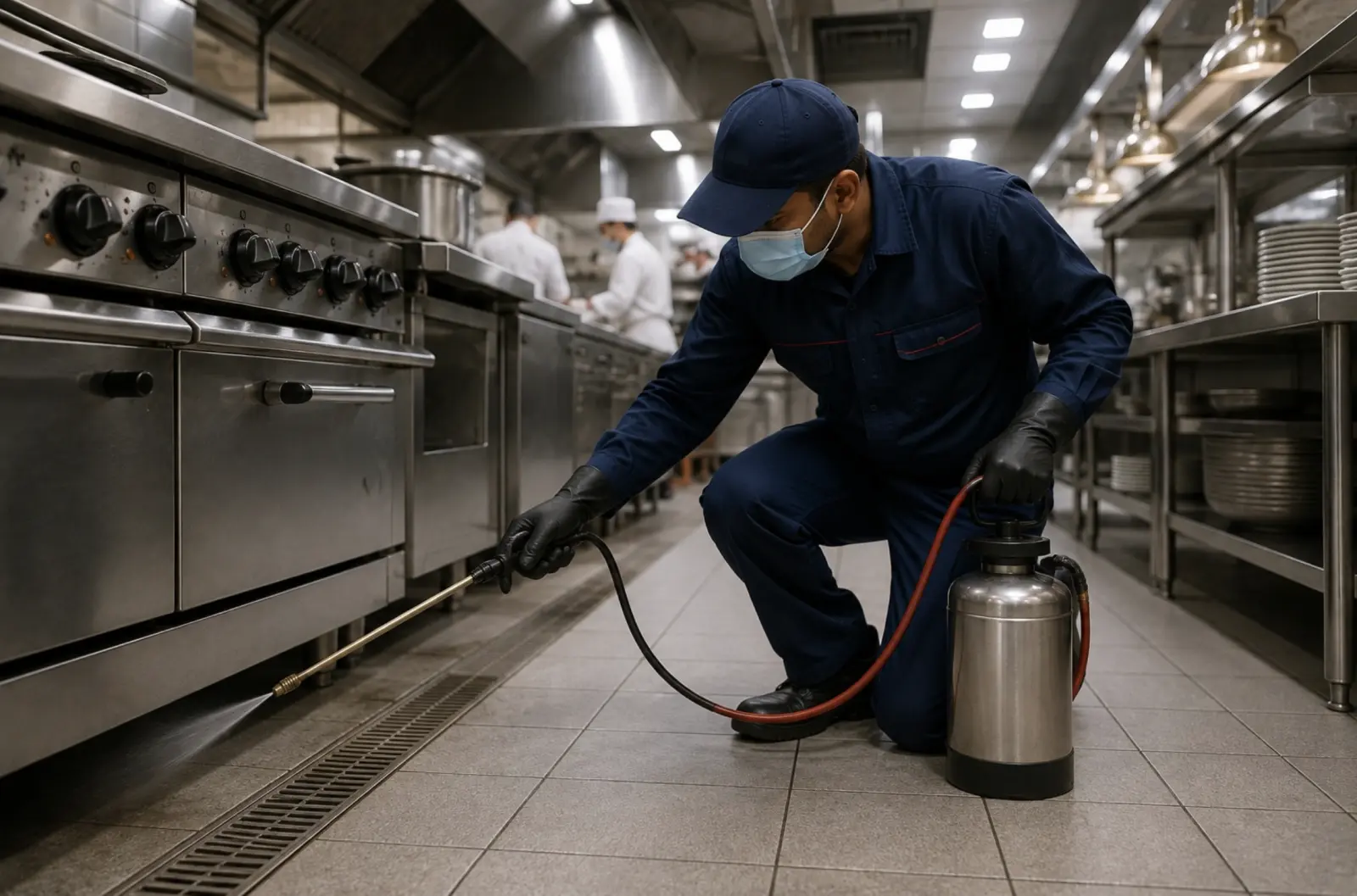
Cockroaches in a food business aren’t just disgusting; they’re a direct threat to your licence, reviews, and reputation. If you run a restaurant, hotel, or cloud kitchen, you already know you need effective commercial cockroach control before an inspector or a guest spots the first one.
The problem is, most businesses in Bangalore and Mysore try to solve it with monthly sprays and half-done cleaning. That works for a week, maybe two, and then the late-night sightings start again near the dishwash area or staff lockers. Done properly, cockroach control is a system, not a one-time treatment.
In a home, a cockroach problem is unpleasant. In a commercial kitchen, it’s a food safety issue that can lead to FSSAI violations and closure notices. Roaches carry pathogens that can contaminate open food, chopping boards, and even clean plates stacked near service.
They love drains, cracks behind tandoor units, cable lines, and warm compressor areas under refrigeration. For restaurant pest control, the risk isn’t just the live insects; it’s the invisible contamination they leave on surfaces you think are clean.
Most people imagine a technician walking around with a spray pump. That’s maybe 10% of proper cockroach treatment in a food-handling site. The real work is inspection, mapping, and choosing the right products for the right zones.
In Bangalore and Mysore kitchens, German cockroaches are the usual culprit. They hide deep inside equipment and come out after lights off. A good technician will open inspection covers, check undersides of gas lines, and identify exact harbourages before applying any gel baits or residual chemicals.
For commercial cockroach control to work long term, the workflow should be structured, repeatable, and documented. A typical program in a hotel or restaurant looks like this:
“Site Survey” — Walkthrough of kitchen, prep, storage, garbage, staff areas and incoming goods zone.
“Monitoring” — Glue traps or monitoring cards placed near drains, dishwash, under counters and near electrical panels.
“Treatment Plan” — Segregation of food, food-contact, and non-food zones with product choices for each.
“Execution” — Gel baiting for equipment and cracks, targeted spray only where allowed, dusting for wall gaps.
“Follow-Ups” — Scheduled visits and emergency callouts logged in a pest service file for inspectors.
FSSAI inspectors look for much more than dead insects. They check structural hygiene, documentation, and your contract for FSSAI pest control with a licensed provider. A single live cockroach during an audit is usually enough to trigger adverse remarks.
Proper records matter. Your pest file should contain service reports, labels of chemicals used, MSDS sheets, and a layout marking trap locations. For a busy hotel pest control program, this folder often sits near the executive chef’s office and gets opened every audit season.
Food safety pest control in India follows the basic principles of integrated pest management. That means inspection first, prevention second, and chemicals as the last layer of defence. For you, that translates into three practical rules.
Never allow general hardware-store sprays inside food-prep areas.
Insist on odourless, food-industry-approved gels and residuals.
Lock in a written service frequency and scope for all critical zones.
Not every corner of your premises carries the same risk. For efficient kitchen pest control, you focus first on areas with food, moisture, and warmth. That means dishwash, preparation, cooking line, and dry store, in that order.
Many infestations in Bangalore sites start from staff washrooms or garbage rooms and then spread to the kitchen through service passages. So the plan has to cover those too, or you’ll keep treating the symptom and missing the source.
The obvious places get cleaned daily, but roaches prefer spots your staff rarely see. Inside oven control panels, cable trays near CCTV wiring, and the hollow space under fixed counters are classic examples. Neglecting these zones weakens any commercial pest management program.
Ask your service provider to show you at least three actual harbourages during the first visit. If they can’t, they probably haven’t inspected deeply enough, and you’ll still see insects near service windows after midnight.
Spraying and baiting without changing habits will keep you stuck in a cycle of complaints and re-treatments. Long-term control comes from pairing treatments with simple, strict routines that support commercial kitchen hygiene day after day.
Some of the most effective changes cost almost nothing and save you far more in fewer complaints and smoother operations during peak hours.
Schedule one 15-minute round at closing just for pest-related checks. This isn’t regular cleaning; it’s a focused walk with a flashlight to check under counters, around dishwash, and above false ceilings. Done daily, it turns small sightings into early warnings that feed into your pest control services plan.
Once a week, pull out one heavy unit on rotation—maybe the dosa plate this week, the refrigeration unit next week. Clean the floor and wall junction, check for droppings or egg cases, and share photos with your service technician during the next visit.
Price matters, but picking the cheapest quote is usually how pest programs fail. Look beyond "per service" rates and ask very specific questions about their restaurant pest control experience across Bangalore and Mysore.
Ask for sample service reports, check the names and registration numbers on their licence, and see if they already service brands similar in size to yours. A team used to high-volume QSR formats will work differently from one focused on small cafés.
A good cockroach exterminator won’t hide behind technical jargon. Ask them which chemicals and gels they plan to use in live kitchens, how they will protect open food, and what they expect from your staff before and after service.
Also ask how they handle odd-hour service calls, festival rush periods, and back-to-back banquets. These details often matter more than which brand of gel they carry in their kit for hotel pest control contracts.
Strong pest control in a food business isn’t about heavy chemical smell or more frequent sprays. It’s about a clear, documented system where commercial cockroach control, cleaning routines, and food safety rules work together instead of fighting each other.
If you’re running operations in Bangalore or Mysore and want that kind of predictability, speak to a specialised provider like Kiran Enterprises, review your current gaps, and set up a program that keeps insects out of sight, inspectors satisfied, and your kitchen ready for every service.
Get a same-day inspection from our certified technicians.
Chat on WhatsAppOr call +91 98452 73699