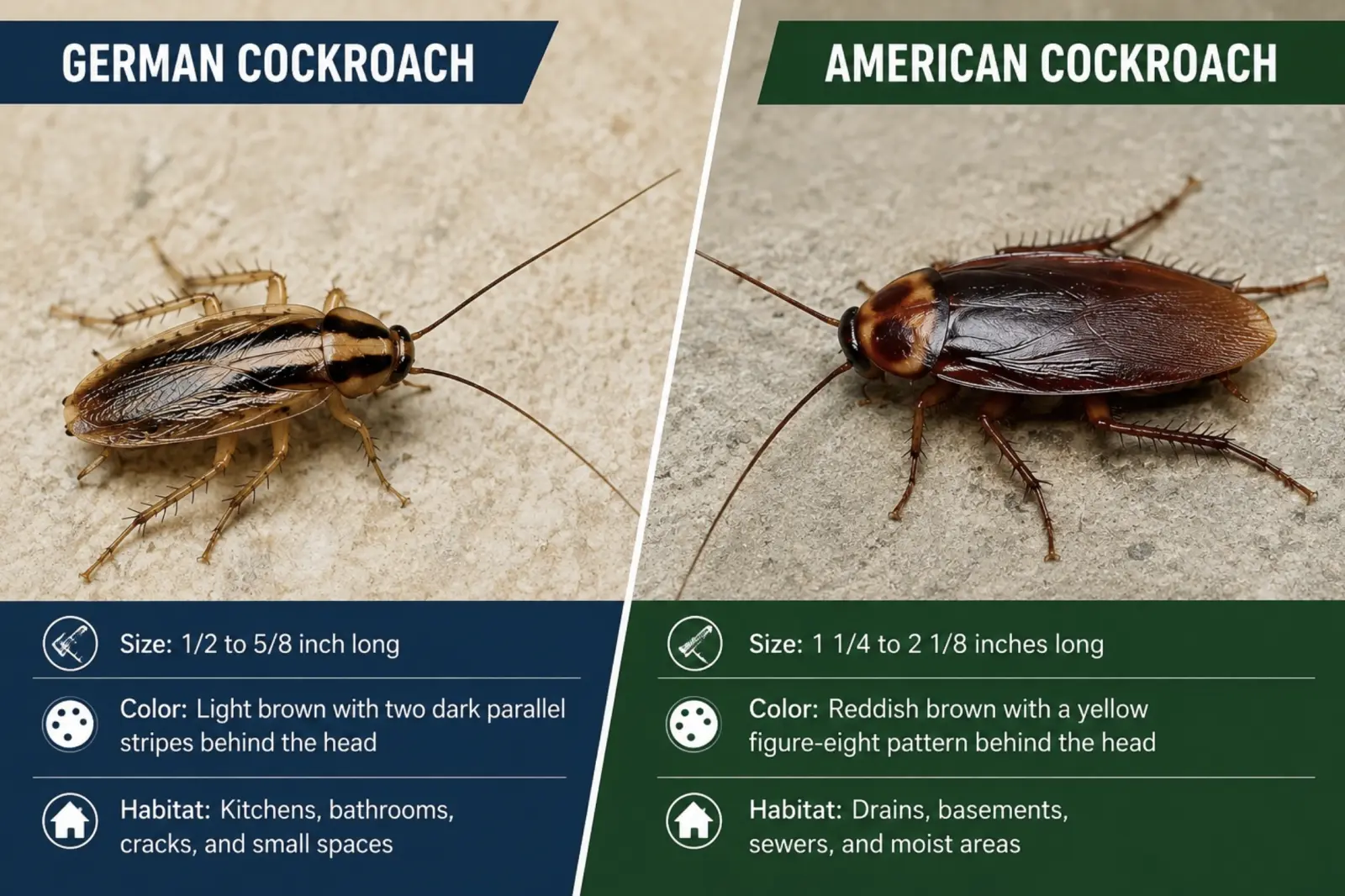
If you keep seeing fast brown bugs dash under the fridge but aren’t sure what they are, you’re not alone. Many homeowners search for "German cockroach vs American cockroach" because telling them apart is the first step to getting rid of them for good.
Both species are common in homes, but they behave differently, spread at different speeds, and need slightly different control strategies. Once you know which one you’re dealing with, you can choose the right treatment plan instead of just spraying and hoping for the best.
Before you dive into traps or sprays, it helps to understand that these two pests have different habits, which is why the same product might wipe out one but barely touch the other.
Many people first notice roaches in the kitchen at night and assume they’re all the same, but a closer look at size, markings, and where you see them tells you which species has moved in.
Size is usually the fastest way to start basic cockroach identification, and a quick glance with a flashlight can tell you a lot in just a few seconds.
On average, adults that are small, light brown, and only about 1.3–1.6 cm long tend to be German, while the big reddish-brown insects closer to 3–4 cm long are almost always American.
In many homes, one species dominates certain rooms, and that pattern offers an early clue before a full inspection of the cockroach species starts.
You’re far more likely to find German roaches in warm, humid, tight spaces indoors, while American roaches often show up first in basements, drains, or storage areas that connect to the outdoors.
If you see small, tan roaches racing across countertops at night, there’s a good chance you’re looking at a German cockroach, especially if they scatter from gaps near the stove or sink.
This species breeds quickly, so an early sighting that seems minor can quietly turn into hundreds of insects hiding inside wall voids, appliances, and cabinet hinges within a few months.
Adults are light brown with two darker, parallel stripes running from the head down the back, and that detail is easiest to see when one pauses on a flat surface.
They prefer warmth and moisture, so you’ll usually see them near dishwashers, under sinks, around refrigerator motors, and tucked behind kitchen kickboards where crumbs and water gather.
This type of household cockroaches tends to stay close to food and water sources, which is why kitchens and bathrooms are usually the first hot spots.
They hide in cracks as thin as a credit card, move from unit to unit through shared walls in apartments, and often hitchhike in cardboard boxes, used appliances, and grocery bags.
If the roach looks large enough that you hesitate to step on it, you may be dealing with an American cockroach, which is sometimes called a "palmetto bug" in warmer regions.
These roaches are more likely to come from sewers, storm drains, and utility lines, so their presence often points to entry points from outside the living space.
An adult American cockroach is reddish-brown with a yellowish figure-eight pattern behind the head and a longer, more tapered body than its German cousin.
They’re strong fliers in warm temperatures, can cover surprising distances, and are often seen in basements, boiler rooms, and commercial kitchens with floor drains and exposed pipes.
In many buildings, a serious cockroach infestation involving this larger species starts in crawl spaces, sump pump areas, or utility corridors that stay damp.
From there, they follow pipes and conduits, slipping through gaps around utility lines, poorly sealed doors, and floor drains to reach kitchens, bathrooms, and laundry rooms.
Both of these insects can trigger allergies and asthma, especially in children and older adults who already have breathing problems.
They crawl through drains, garbage, and dirty water, then track germs onto dishes, countertops, toothbrushes, and any surface where food is handled or stored.
Every hidden female can carry dozens of eggs, so by the time you see one or two roaches in the open, there are usually many more behind the scenes.
For that reason, treating at the first confirmed sighting instead of waiting until you see them during the day can dramatically cut the total size of the cockroach infestation.
Once you’ve decided whether you’re facing German cockroach vs American cockroach, you can choose a control plan that fits the way that specific species feeds and hides.
Good results usually come from combining several tools at once instead of relying on just one spray, especially in multi-unit buildings or older homes with lots of cracks.
Sticky traps are a simple way to track where cockroach species are most active, and placing them along walls behind appliances gives you a clearer picture within a few nights.
You can also use gel baits and bait stations along travel paths, but make sure not to cover those same areas with strong repellent sprays, which can keep insects from ever reaching the bait.
Clean up crumbs, grease, and food spills every night before bed.
Fix dripping faucets and sweating pipes that add extra moisture.
Seal gaps around pipes, cables, and wall cracks with caulk.
Store dry foods in sealed containers instead of open boxes or bags.
Take trash out regularly and keep bins closed with tight lids.
In small kitchens, focusing on a detailed clean-out around the stove and sink often makes other cockroach treatment steps much more effective because it removes competing food sources.
Even simple changes like vacuuming behind the refrigerator and clearing clutter from under the sink can reduce hiding places and force roaches toward your bait placements.
If you’ve been fighting roaches for months with little improvement, a licensed pest control provider can inspect hidden areas and identify the exact species and entry points.
Professionals have access to targeted products, application tools, and monitoring methods that most homeowners don’t, which often means faster, longer-lasting relief.
Long-term success isn’t just about killing what you see today; it’s about building habits of cockroach prevention into your daily and weekly routines.
Simple steps like wiping down counters, running the dishwasher promptly, and avoiding stacks of cardboard can make your home much less attractive to these pests.
Try to keep pet food dishes clean, avoid leaving bowls out overnight, and regularly wash under mats and appliances where crumbs hide from quick cleaning.
Running an exhaust fan in bathrooms and kitchens, improving ventilation in basements, and using a dehumidifier in damp rooms makes cockroach removal easier because roaches prefer humid air.
For entry points, check that window screens fit tightly, weatherstripping around doors is intact, and gaps at the base of garage doors are sealed with proper thresholds.
Outside the home, reducing clutter near the foundation and trimming plants back from walls can decrease the chance that outdoor roaches wander inside.
Knowing the difference between German cockroach vs American cockroach helps you match your response to the actual threat, from fast-breeding kitchen invaders to larger sewer-connected insects that slip in from below. If sightings are frequent or you’re seeing roaches during the day, it’s time to move from spot-treating to a full plan.
If you’re tired of sharing your home with these pests, reach out to a trusted local expert like Kiran Enterprises for a thorough inspection, targeted treatment, and clear prevention advice tailored to your space.
Get a same-day inspection from our certified technicians.
Chat on WhatsAppOr call +91 98452 73699