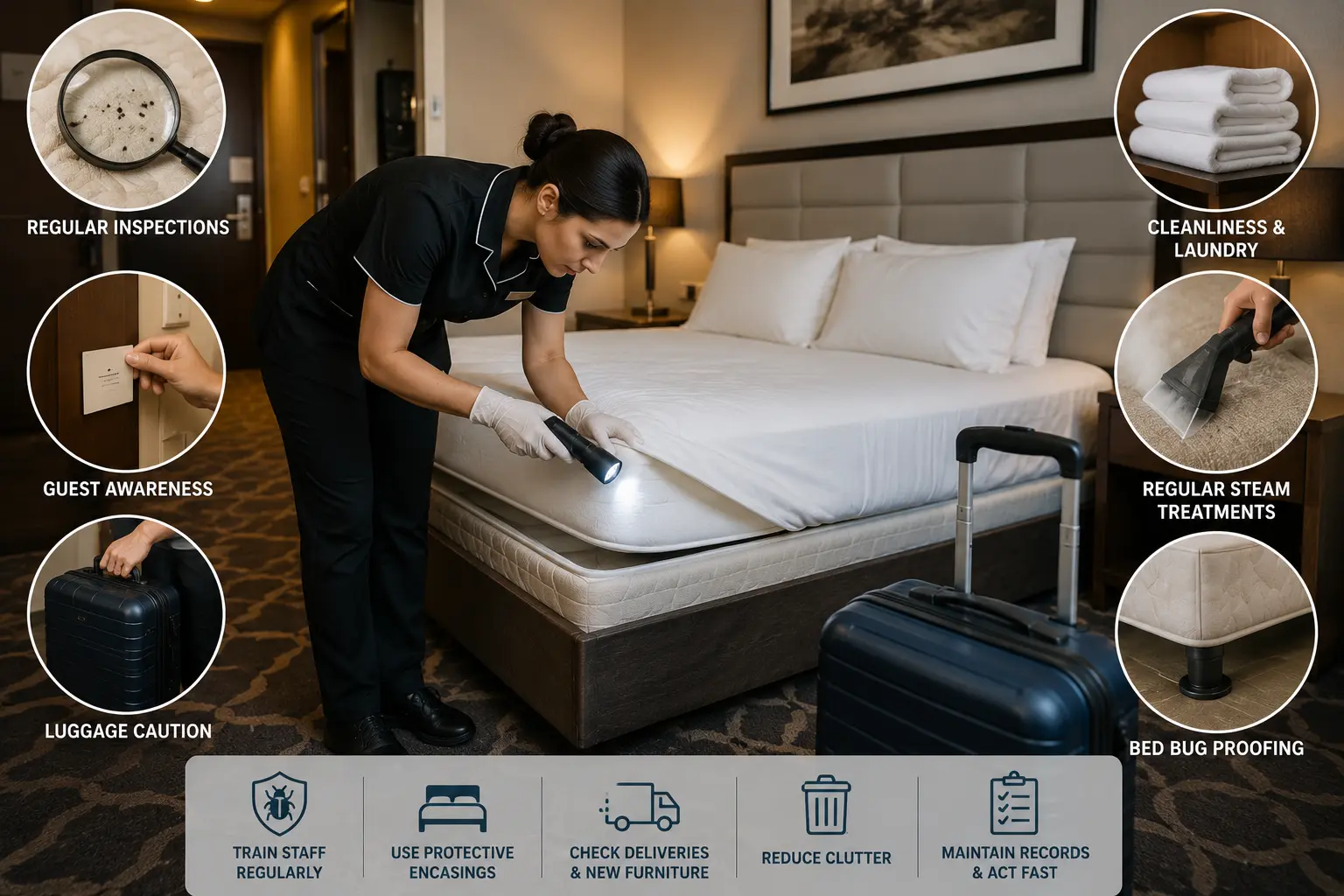
Few things damage a hotel’s reputation faster than a guest posting a photo of bed bugs. One overlooked room can trigger refunds, bad reviews, and even media coverage, which is why smart operators put hotel bed bug prevention at the top of their risk list.
The good news is that most infestations are avoidable with tight routines, clear staff training, and fast response when something looks suspicious. With a practical system in place, you can protect guests, your team, and your brand without turning every room change into a crime-scene investigation.
Bed bugs don’t care if you run a luxury property or a budget motel; they travel in luggage and move from room to room quietly. One missed sign can spread quickly across a floor, and the cost to treat multiple rooms is always higher than stopping the first one.
Beyond treatment, the real damage shows up in refunds, comped nights, lost repeat business, and discounting to repair your online rating. For most properties, protecting that rating is the main reason to invest in consistent hotel pest control rather than relying on emergency call-outs.
Strong plans don’t live only in a policy binder; they show up in daily routines. A solid hotel bed bug prevention strategy has clear steps for who inspects, how often, and what happens if someone spots a problem or even a suspected insect.
Your plan should be written, simple to follow, and part of onboarding for all room attendants and supervisors. When procedures are clear, new hires are less likely to miss early warning signs of bed bugs in hotels during busy shift changes.
Start by mapping your high‑risk areas and traffic patterns. Rooms near laundry chutes, elevators, and entrances see higher turnover, which makes them priority inspection zones for any structured hospitality pest control program.
Include a clear escalation ladder so frontline staff aren’t guessing. For example, if an attendant sees a suspicious stain on a mattress, they pause work, call a supervisor, and note it on the room log. That note should be reviewed daily as part of broader hotel hygiene checks.
Prevention fails quickly when “everyone” is responsible but no one is truly accountable. Assign a specific manager or supervisor to own bed bug management, including training, documentation, and coordinating service visits.
That person should keep a simple map of rooms, mark any past issues, and track dates of each hotel room inspection. Over time, this history will help you spot patterns, such as particular floors or wings that need extra attention.
You don’t need advanced tools to catch early signs, but you do need a repeatable checklist. The fastest way is to build bed bug checks into your standard hotel bed bug inspection routine for arrivals, departures, and periodic deep cleans.
Most properties use a “outside in” approach: start at the door, then move to the bed, soft furnishings, storage areas, and finally the bathroom. This rhythm keeps staff from skipping spots when they’re under time pressure during peak occupancy.
At the bed, attendants should pull back linens and inspect mattress seams, corners, and the area where the headboard meets the wall. Tiny dark spots, shells, or live insects are all red flags commonly linked with bed bugs in hotels.
Next, they should scan nightstands, lamps, and picture frames, especially along cracks and screw holes. Training should include photos and short videos, so staff can visually match what they see during each hotel room inspection without second‑guessing themselves.
Simple tools like a flashlight, disposable gloves, and a thin card or scraper help attendants check seams and crevices without touching surfaces directly. Mattress encasements rated for bed bugs are another strong layer in hotel bed bug prevention for high‑turnover rooms.
Many properties also use interception devices under bed and sofa legs. These passive traps make it easier for commercial pest control teams to confirm activity before it spreads widely through a floor of rooms.
Your housekeeping team spends more time in guest rooms than anyone else, so their daily routines are your best defense. The most effective hotel housekeeping tips focus on slowing the bugs’ ability to move and making signs easier to spot.
One example is handling linens and lost‑and‑found items carefully. Bagging suspect items immediately and labeling them for inspection stops possible hitchhikers from reaching laundry carts or storage closets used across multiple floors.
Keeping closets and under‑bed spaces clear helps staff see issues early instead of working around piles of spare amenities. It’s a simple but powerful part of hotel pest prevention that often gets missed when storage spaces slowly fill up.
On the laundry side, hot wash and dry cycles are essential, especially for linens and duvets from any room flagged as suspicious. Clear signage in the laundry area should remind staff which settings are required after a confirmed incident involving bed bugs in hotels.
Even with strong internal routines, most properties benefit from a partner that specializes in hotel pest control. Specialist technicians understand guest expectations, discreet scheduling, and how to inspect without disrupting check‑in or housekeeping flows.
They can also advise on room design choices that make inspections faster, such as bed frames with fewer hollow sections and furniture that’s easier to move. These details matter when you’re trying to keep hotel bed bug prevention consistent across dozens or hundreds of keys.
A good provider will never just “spray and go.” They should start with a full survey, document any activity, and outline a tailored plan for hospitality pest control that fits your occupancy patterns and building layout.
Ongoing visits might include proactive inspections, monitoring devices, staff refresher training, and clear reporting. Those reports should be simple enough that your leadership team can quickly see trends related to bed bug management without digging through technical jargon.
Hotels that stay ahead of infestations don’t rely on luck. They build habits: routine inspections, quick reporting, good laundry practices, and close coordination with their commercial pest control partner.
If you’re serious about protecting your reputation, now is the right time to tighten your processes, review training, and formalize your hotel bed bug prevention plan. A focused approach protects your guests, your staff, and the long‑term health of your brand, especially with expert support from Kiran Enterprises.
Get a same-day inspection from our certified technicians.
Chat on WhatsAppOr call +91 98452 73699