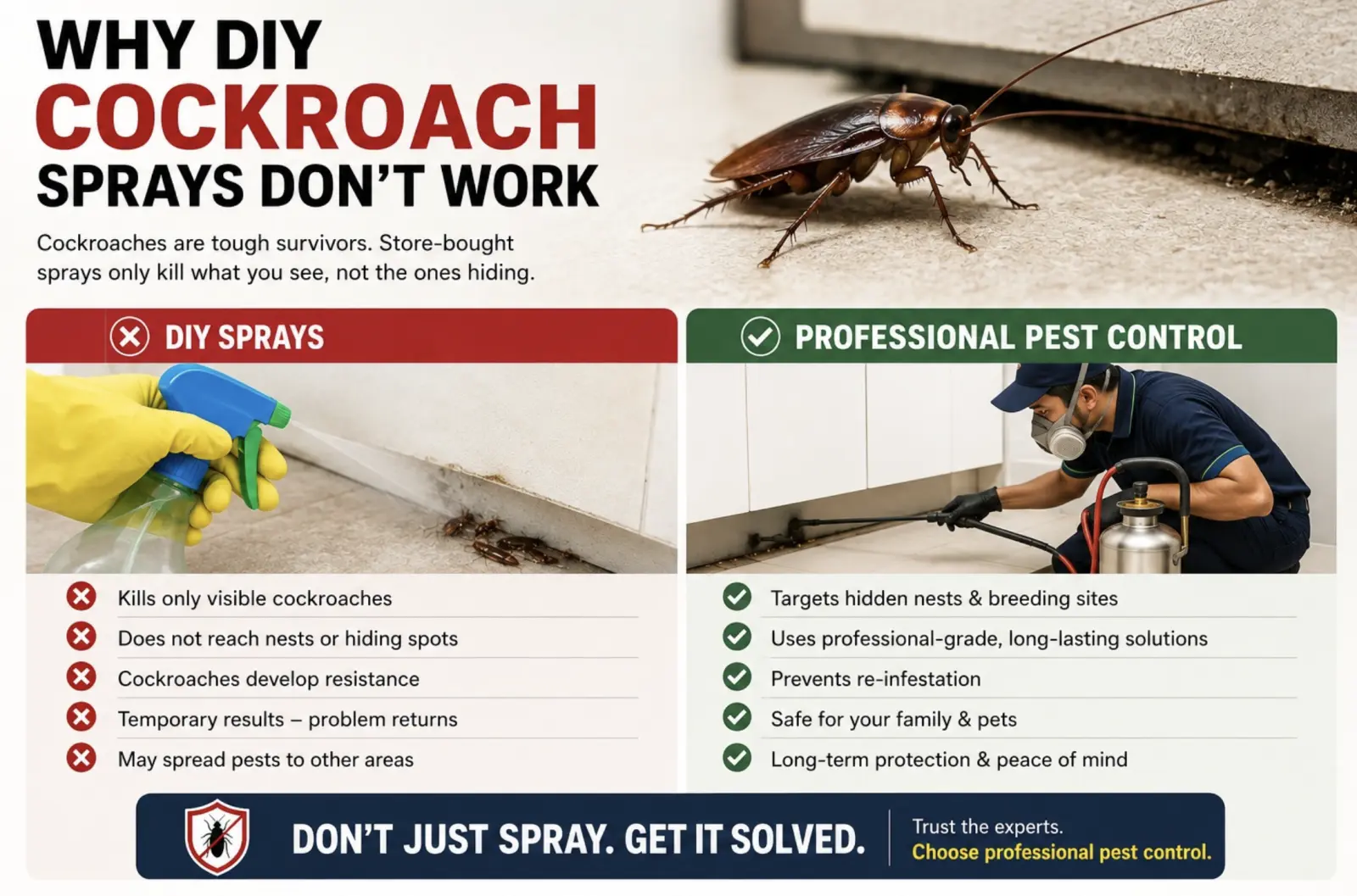
Spraying every corner of your kitchen and still seeing roaches crawl out at night is frustrating, a little gross, and honestly exhausting. Many people pour time and money into DIY cockroach control only to watch those insects come right back like nothing happened.
If that sounds familiar, you are not alone. Store-bought products can have a place, but they rarely solve a real cockroach infestation on their own. Understanding why they fall short is the first step toward using your effort, budget, and energy on what actually works long term.
Most home efforts focus on what you can see: the few roaches that run when you turn on the light. The problem is that for every cockroach you see, there can be dozens more hiding in cracks, wall voids, drains, and appliances. DIY cockroach control that only targets visible insects barely scratches the surface of the colony.
On top of that, many products are used once or twice and then forgotten. Cockroaches breed fast, adapt quickly, and take advantage of any gap in your routine. A scattered, occasional approach lets them rebound before you even notice the difference.
Roaches are nocturnal and love tight, dark spaces. They prefer to stay behind refrigerators, inside cabinets, under sinks, and even inside electrical appliances. They squeeze into gaps as thin as a credit card, so a quick spray along the floor rarely reaches the places they actually live.
They also feed on almost anything: grease, crumbs, pet food, cardboard, glue, and even soap residue. A kitchen that looks "clean enough" to you can still be a full buffet to them, which means they can keep thriving despite your efforts.
Many people use a general cockroach treatment once, see a small drop in activity, and then assume the job is done. A few weeks later, the insects are back, sometimes in larger numbers. What usually happened is that only the most exposed roaches died, while the rest stayed deep in their hiding spots and kept breeding.
Over time, using the same approach again and again can also encourage more tolerant individuals to survive and pass on those traits, which is why relying on a single product for years becomes less effective.
Retail aerosols create a satisfying sense of action, but a typical cockroach spray rarely reaches the nesting sites where eggs and nymphs are protected. You might kill the scouts, but their family is untouched and keeps spreading.
These products are often applied too lightly or in the wrong places. Heavy spraying in open areas can even push roaches deeper into walls, making them harder to reach and more difficult to track.
Many cans promising a powerful cockroach killer are designed for quick knockdown, not full-colony elimination. They may drop a roach on contact but do little to interrupt breeding or contaminate the nest.
Labels also matter more than most people realize. Using a product meant for one surface on another, or ignoring ventilation and safety directions, can create health risks without delivering better results.
Solving a cockroach infestation means thinking like an inspector, not just a shopper. Successful control uses a mix of inspection, sanitation, targeted products, and follow-up checks instead of a single quick fix from the hardware store.
The goal is to reduce food, water, and hiding spots while delivering carefully chosen treatments into the exact cracks, crevices, and travel paths that roaches actually use every night.
Many professionals rely on slow-acting products such as high-quality cockroach gel bait rather than just spray-and-pray tactics. These baits are designed so the insect feeds, returns to its shelter, and spreads the active ingredient through the group.
Placement matters as much as the product itself. Bait put on dusty surfaces, in puddles of cleaning chemicals, or right next to strong food smells will almost always be ignored.
Licensed technicians have training in species identification, building construction, and local conditions, which helps them choose the right professional cockroach control methods for each property. They combine baits, dusts, and carefully applied liquids instead of relying on one tool.
They also build a plan instead of a single visit, scheduling follow-up inspections and adjustments to make sure the population keeps dropping until it is fully under control.
Even if you plan to bring in outside help, there are smarter ways to support DIY cockroach control around the house so any treatment works faster and lasts longer. A few consistent habits can dramatically reduce how attractive your home is to these insects.
Think of these steps as starving the pests, drying them out, and blocking their usual hiding spots, so every product used against them has a better chance to work.
Wiping grease from stove surfaces, sealing open snack bags, and clearing food debris from under appliances are small habits that add up. Pair that with promptly fixing dripping pipes and drying out wet cabinets, and you remove two major roach magnets at once.
It also helps to store pet food in sealed containers and clean dishes soon after meals, so there are fewer easy meals sitting out overnight.
If you pick up a new cockroach treatment from the store, read the full label slowly before opening it. Look for where it can be applied, how often, and what safety steps the manufacturer recommends inside kitchens and bedrooms.
Use tiny amounts in many precise spots instead of heavy amounts in a few obvious ones, and always keep anything you apply away from children, pets, and food preparation surfaces.
There is a point where repeated home efforts stop making sense and start wasting weekends. If you’re still seeing live roaches after a few weeks of cleaning and careful product use, it may be time to look at pest control services that specialize in insects like these.
Professional help is especially important in multi-unit buildings, where roaches can travel between flats through shared walls, plumbing, and hallways, making solo efforts much less effective.
Waking up to droppings on counters, finding egg cases in cupboard corners, or smelling a musty, oily odor are all signs that the population is more established than it appears. Seeing roaches during the day often means the hiding spaces are crowded.
If you share walls with neighbors and notice insects in several rooms, a trained cockroach exterminator can coordinate treatment so the issue is addressed across connected areas, not just in a single kitchen.
Before your first visit, note where you see insects, unusual smells, or stains, and when activity is highest. Share what you’ve already tried, including any cockroach spray you used and where it went, so the technician can avoid conflicts and choose compatible products.
Ask for clear guidance on how to support the work between visits, such as which cleaning products to avoid on treated areas and how often to check bait placements.
Once numbers are down, keeping roaches away is mostly about routine. A basic home pest control checklist helps you stay ahead of stray insects that hitchhike in with groceries, boxes, or secondhand furniture.
Think in terms of weekly, monthly, and seasonal tasks rather than one giant cleaning spree that you only manage once a year.
On a weekly basis, focus on wiping counters, sweeping under the dining table, and taking out rubbish before it overflows, all of which cuts off easy food sources for insects that might be exploring at night.
Each month, it helps to pull out one or two appliances, check under the sink, and quickly look for new gaps, cracks, or water leaks so you can seal or repair them before they become another roach highway.
As seasons change, keep an eye on areas where plumbing lines enter the building, because even small openings can become paths for pests moving between units.
Some households choose to keep a small amount of cockroach killer in key hotspots as a backup, but any leftover product should be stored safely, out of reach of curious hands and away from food storage.
You can also work with a provider to schedule light, periodic cockroach treatment in risk-prone areas of the building rather than waiting until numbers surge again.
For apartments or homes that have dealt with insects before, a professional cockroach control plan can be set up as a preventive service rather than a crisis response.
Good cockroach prevention is mostly about closing the small gaps in your routine that roaches exploit, like leaving rubbish bags open overnight or ignoring a slow drip under the sink for a few months.
If you get everyone in the home to adopt a few simple habits, such as not eating in bed and rinsing dishes soon after use, you reduce the small daily chances that let a hidden population grow unnoticed.
Quick sprays and one-off products rarely solve serious roach problems, but a mix of smart cleaning habits, targeted tools, and, when needed, expert help can. If you’re tired of guessing, consider pairing thoughtful DIY cockroach control with a visit from a trusted local team like Kiran Enterprises so you can finally get your kitchen, and your peace of mind, back.
The sooner you move from random products to a clear plan, the faster those late-night surprises start to disappear.
Get a same-day inspection from our certified technicians.
Chat on WhatsAppOr call +91 98452 73699